Different domains of deprivation
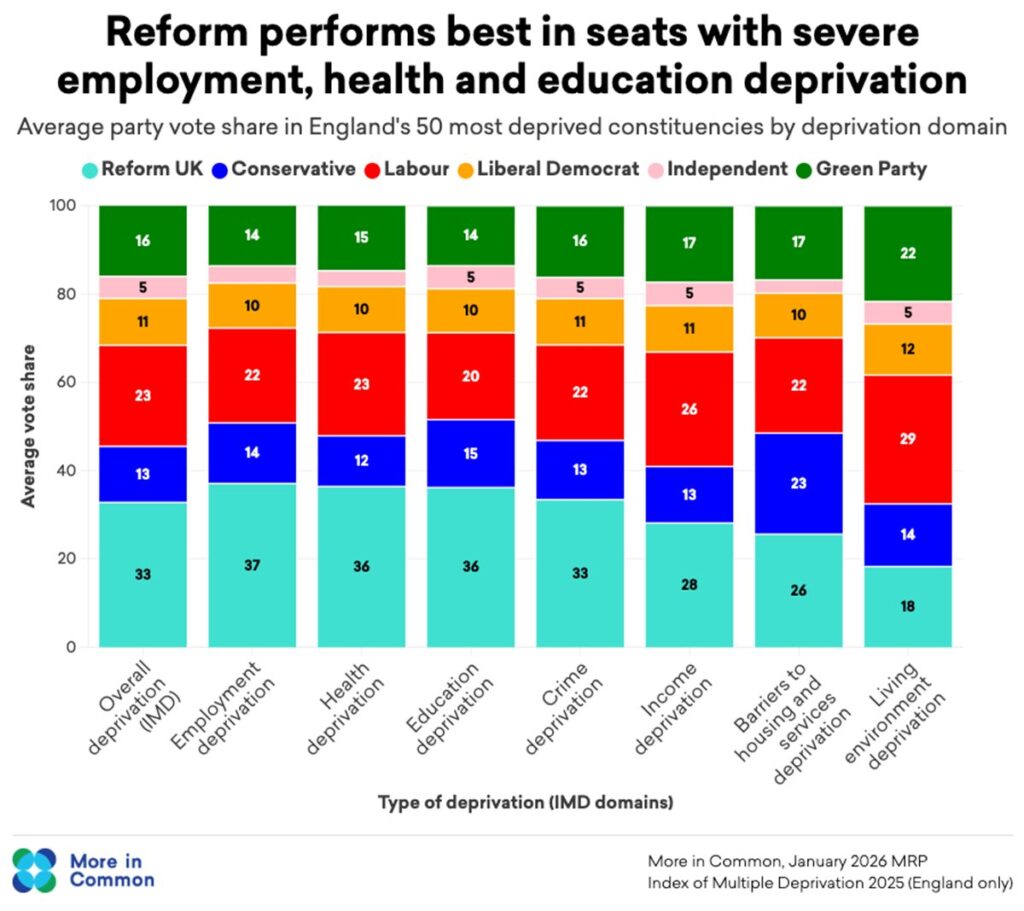
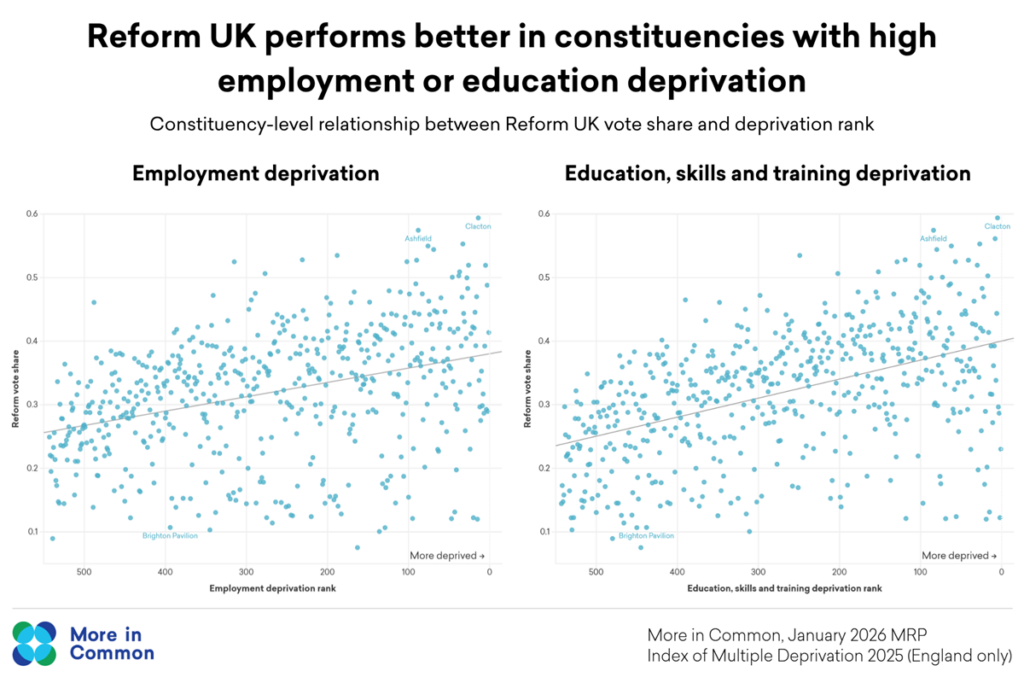
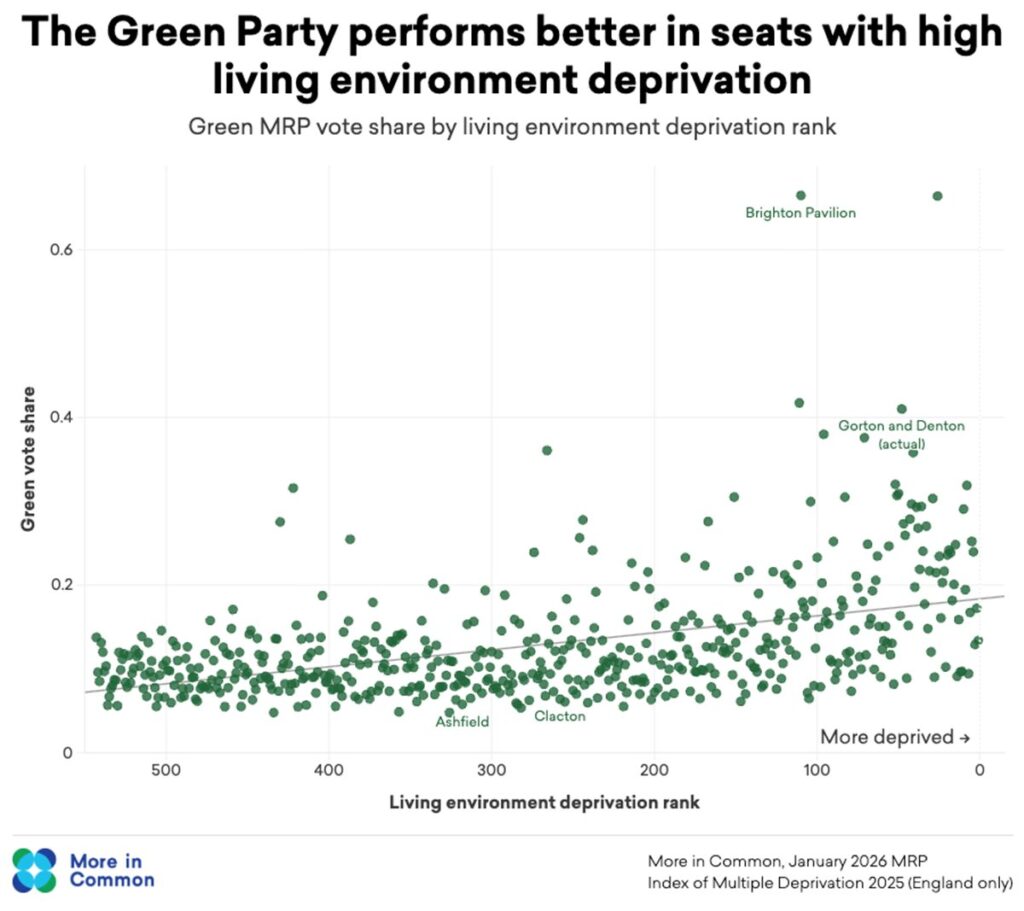
When deprivation is broken down into its base aspects, it becomes clear that each party succeeds in differing domains. Compared to their national vote share, Reform is overrepresented in the seats with highest employment, health and education deprivation and the Greens slightly underperform. However, in seats with higher living environment and income deprivation, the Greens tend to overperform while Reform are significantly under-represented.
The Index of Multiple Deprivation (IMD) is the official measure of relative localised deprivation in England used by the government. The IMD divides indicators into seven domains which are then weighted to give overall deprivation. These domains are:
- Employment deprivation: measures the working-age population involuntarily excluded from the labour market.
- Health deprivation: high rates of premature death, poor physical/mental health, and disability.
- Education, skills and training deprivation: measures the lack of qualifications and skills in an area, as well as education deprivation for children/young people.
- Crime deprivation: risk of personal and material victimisation by crime at the local level.
- Income deprivation: marked by the proportion of people on low income, including in-work poverty and those who are out-of-work.
- Barriers to housing and services deprivation: physical and financial accessibility of housing and local services.
- Living environment deprivation: marked by poor housing quality, overcrowding and air quality.
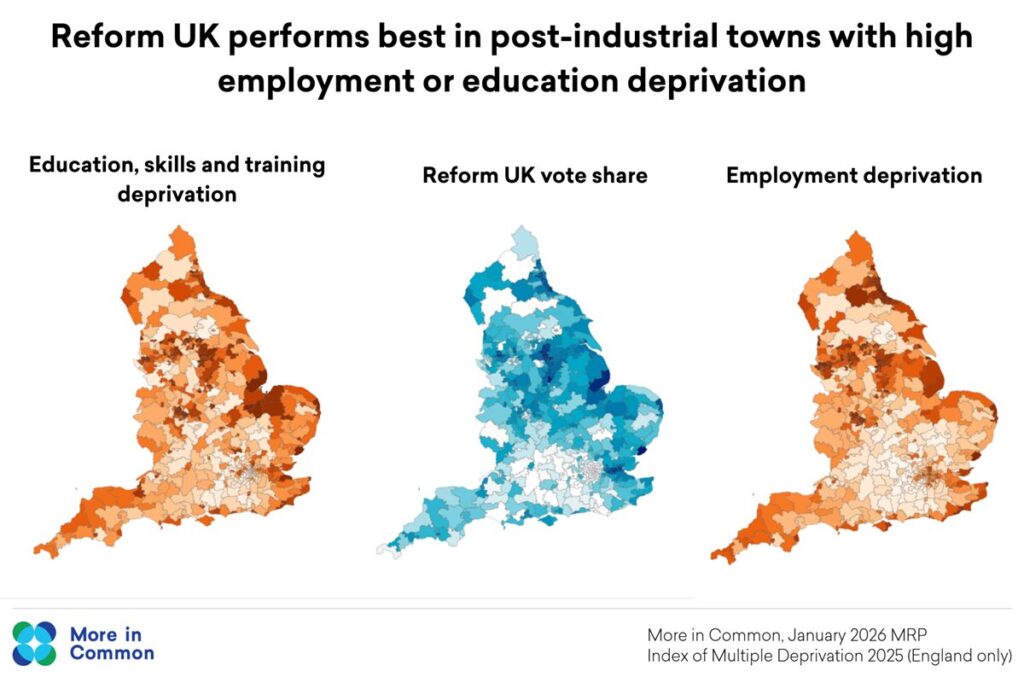
Where Reform performs well: post industrial towns with weak employment and low educational opportunities
Reform’s strongest support comes from places with a low skills base, poor health, and weak labour markets – areas that may feel economically “left behind”. These constituencies are defined by high employment deprivation, health deprivation, and education, skills and training deprivation. These are often former industrial towns, struggling coastal communities, and peripheral urban areas where economic opportunity has been limited for decades. Seats such as Clacton, Blackpool South, Hartlepool, Middlesbrough and Barnsley South illustrate this pattern.
Where the Green Party performs well: urban seats with low incomes and poor housing
While Reform thrives in post-industrial towns, the Greens perform best in urban constituencies marked by high in-work poverty, poor housing, pollution, and degraded local environments, where concerns about quality of life and living conditions are more visible. These constituencies are defined by high income deprivation and high living environment deprivation.
The Greens are overrepresented (performing above the 13 per cent England-wide average) in 9 of the 10 most deprived seats by income deprivation, and 7 of the 10 most deprived seats by living environment deprivation. Examples of these seats include Birmingham Ladywood, Hackney North and Stoke Newington, Dulwich and West Norwood, Sheffield Brightside and Hillsborough, and Tottenham.
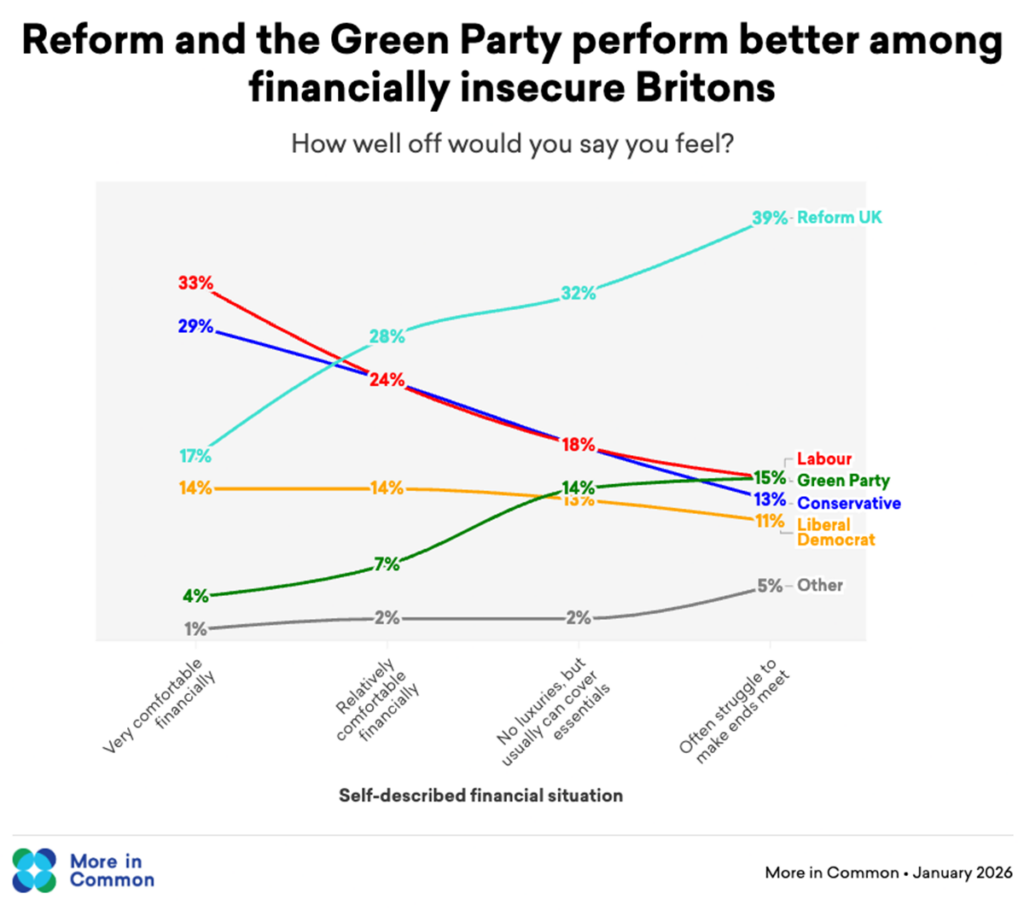
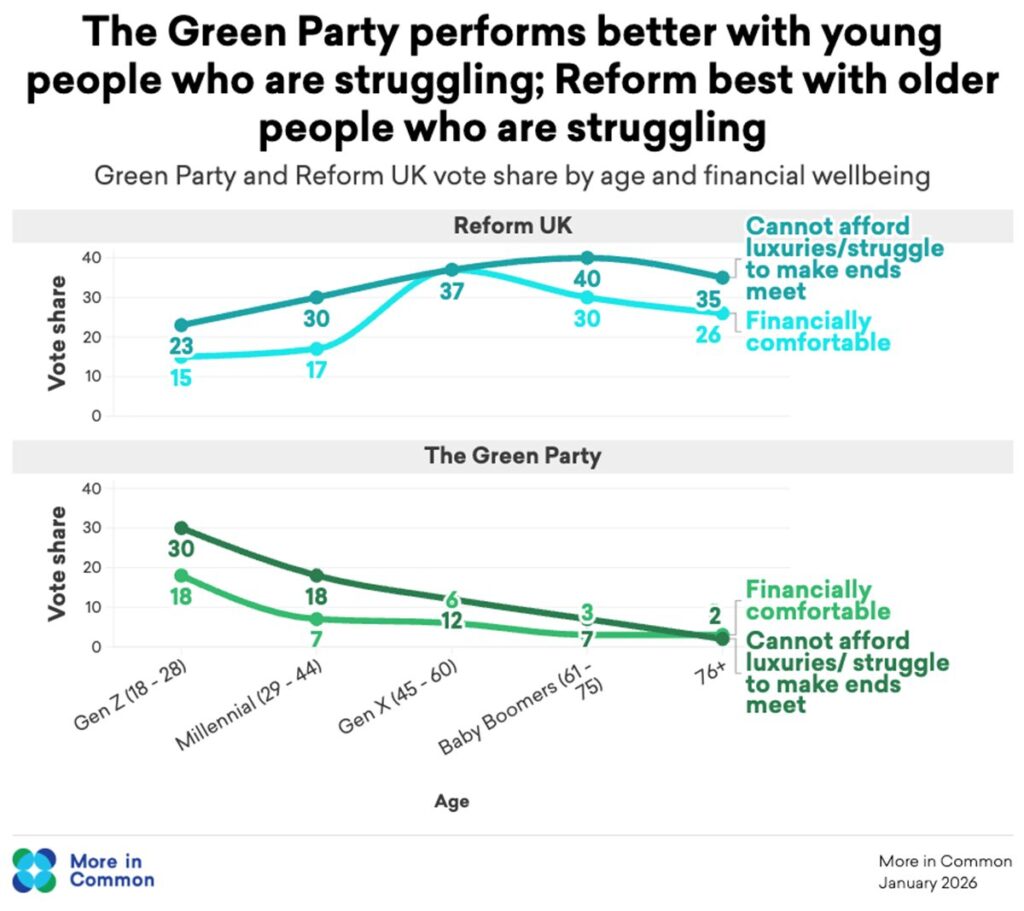
 Of course, age plays a role in this pattern. Many of these urban seats have relatively young populations, which helps explain why the Green vote share is higher. But the interaction between youth and financial insecurity also matters. Among financially comfortable Gen Z voters, the Greens earn around 18 per cent of the vote. Among Gen Z Britons who are struggling financially, this rises to around 30 per cent. In other words, places with large numbers of young people experiencing economic pressure are particularly fertile ground for the Greens. In contrast, Reform peaks among Baby Boomers who are struggling financially (40 per cent).
What Green and Reform voters have in common
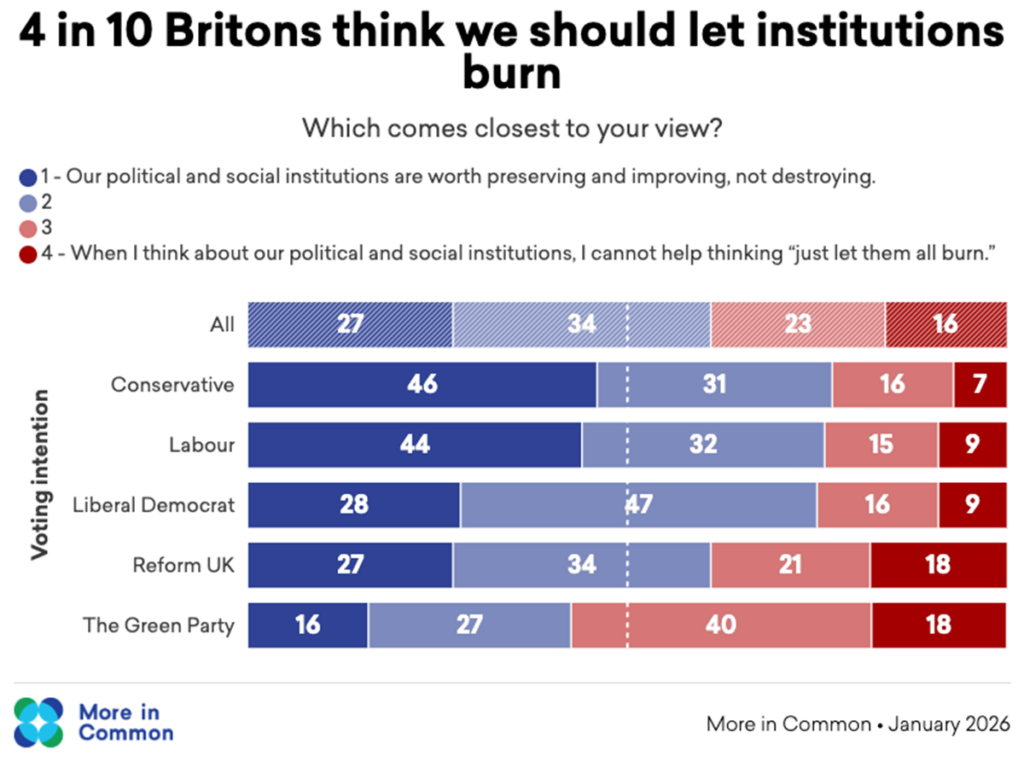
Britons are split on whether the country’s political turmoil is best addressed incrementally or through a more radical reset of the system. Almost two in five suggest that we should simply ‘burn it all down’ rather than improve existing institutions.
This divide is even starker when looking at voting intention. While Labour, Conservative and Liberal Democrat voters overwhelmingly say that we should preserve and improve our political and social institutions, Green and Reform voters share a far greater desire for radical change. Over half of Green voters and 39 per cent of Reform voters say that we should let our institutions burn.